Meet the Meteorologist
What's your favorite weather phenomena?
What got you interested in the weather?
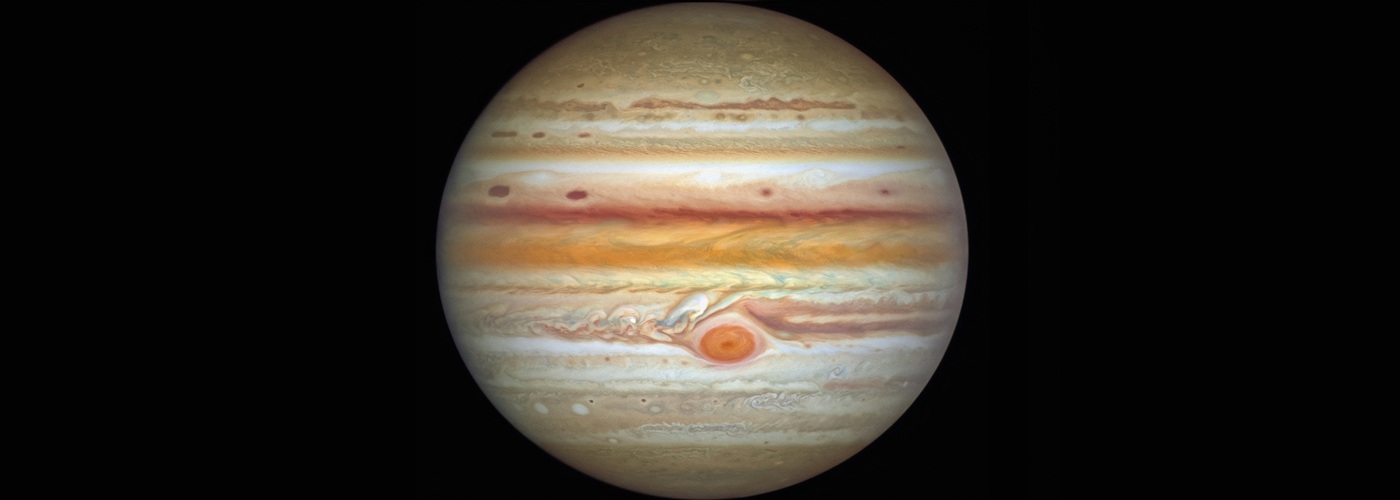

Jupiter’s storms are not just enormous, they are electrically extreme. Using data from NASA’s Juno spacecraft, researchers at UC Berkeley found that some lightning flashes on Jupiter may be more than 100 times stronger than typical lightning on Earth, with some estimates suggesting even greater power.
The study, published in AGU Advances, used Juno’s microwave radiometer to detect radio emissions from lightning hidden inside Jupiter’s thick clouds. Because microwaves can pass through clouds, the instrument offered a way to estimate lightning energy more accurately than visible-light observations alone.
Earlier spacecraft had suggested Jupiter’s lightning was unusually powerful, but Juno’s more sensitive observations revealed that the planet also produces many weaker flashes, complicating the picture. To resolve that, scientists focused on isolated storms in Jupiter’s North Equatorial Belt during a quieter period in 2021 and 2022. By combining Juno data with Hubble images and observations from amateur astronomers, they pinpointed several long-lived “stealth” superstorms and directly measured their lightning output.
During close flybys, Juno detected an average of three lightning flashes per second, including 206 microwave pulses in one encounter. Across 613 pulses, the team estimated lightning strengths ranging from Earth-like to more than 100 times stronger.
Why so powerful? Jupiter’s atmosphere is mostly hydrogen, unlike Earth’s nitrogen-rich air. That changes how moist air rises and how storms build energy. Jupiter’s storms can also tower more than 100 kilometers high, far taller than Earth’s typical thunderstorms. The result is a planet where lightning may release 500 to 10,000 times more energy than a typical Earth strike.
Scientists still do not fully understand why Jupiter’s lightning is so intense, but the findings offer a new window into storm physics on other planets.
 Paul Trambley
 Derek Heit
 Jennifer Wojcicki
 Laura Lockwood
 Ray Miller